
Elder Futhark · rune 24 of 24
Othala ᛟ
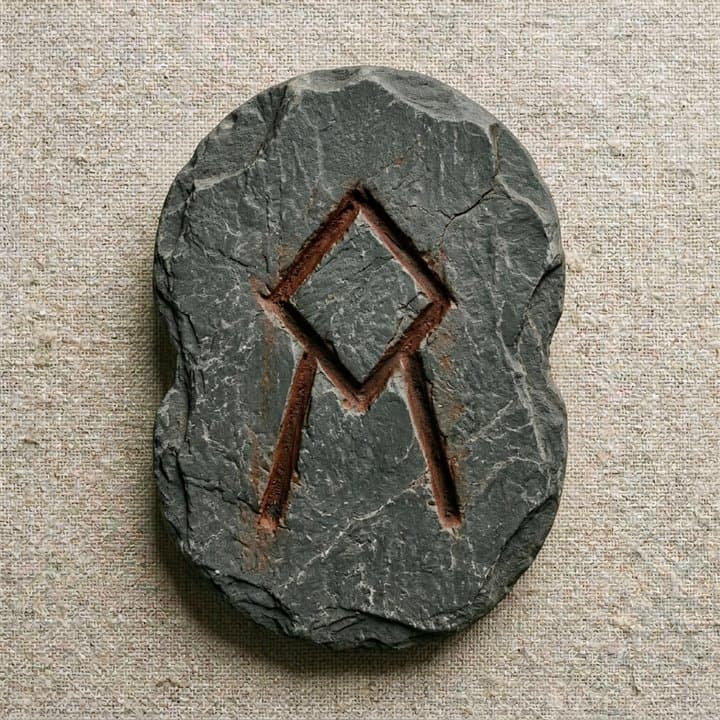
| Character | ᛟ (Unicode U+16DF) |
| Name | Othala · Old English ēþel |
| Sound value | o |
| Number | 24 of 24 |
| Aett | third (last rune) |
| Reversal | yes |
Inheritance · belonging · what is received and passed on
Othala is associated with inherited property or an ancestral estate. The Old English poem says an estate is dear to every person who can enjoy what is right and proper there in lasting prosperity. The verse concerns land, kinship, rights, and material continuity—not an abstract guarantee that ancestry makes someone superior.
The rune has also been appropriated by racist and extremist movements in modern times. Historical use and modern appropriation are different facts, and public use should account for both. Context does not erase history, but history does not erase present social meaning.
The Anti-Defamation League also notes that Othala appears in non-extremist runic writing and runestones, including use by non-racist pagans. Its guidance is to assess the complete context rather than treating every appearance of the historical character as extremist.
For a permanent or public design, compare the complete motif with the rune tattoo guide before using Othala.
The name and its history
Reconstructed ōþala or ōþila means inherited property or estate. Old English ēþel covers property, inheritance, homeland, and native land. The name points to a legal and social relationship, not simply a pleasant feeling of home.
Scandinavian odal rights preserved family claims to land held across generations. That makes Othala a precise contrast with Fehu: Fehu is movable wealth; Othala concerns the ground, rights, and obligations that remain tied to inheritance.
What the rune poems emphasize
Only the Old English poem preserves an Othala verse. It says an estate is dear when a person can enjoy rights and necessities there, in a dwelling with prosperity. The condition matters: belonging is linked to being able to live with recognized rights, not presented as an unconditional claim of blood.
That distinction is especially important because modern extremists have appropriated the sign. The historical verse offers a legal and household frame; it does not teach racial nationalism.
Upright
Upright Othala asks what you have inherited: property, access, craft, obligation, story, or a place within a community. A responsible reading includes stewardship and the people affected by the boundary, not only the benefit received inside it.
Reversed
Reversed Othala can frame exclusion, possessiveness, a disputed inheritance, or tradition used to avoid scrutiny. It may also point to separation from home or the need to choose which legacy not to continue. Reversal is modern.
Othala in four areas of life
Love. Family patterns shape relationships without dictating them. Decide together which customs support belonging and which create exclusion.
Work. Institutional memory can protect hard-won knowledge, but “how we have always done it” is not sufficient evidence.
Money. Inheritance, property, and tax questions require current legal and financial advice. The rune cannot establish ownership.
Well-being. Family history may be relevant information for professionals, not a symbolic diagnosis or fixed destiny.
Neighboring runes
With Fehu, the last rune meets the first: inherited land beside movable resources. The pair can frame an estate, transfer, family asset, or disagreement about what should remain and what may circulate.
With Mannaz, origin meets community. It redirects attention from an abstract institution to the actual people included, excluded, supported, or burdened by it.
As a daily rune
Name one inheritance today. Preserve what is worthy, repair what is harmful, and record what you intend to pass on.
Choose something concrete: a document, practice, object, privilege, or obligation. Ask who else has a claim or stake.
Frequently asked questions
What does Othala mean historically?
The Old English poem centers on an inherited estate and the ability to enjoy rightful prosperity there.
What does reversed Othala mean?
It can highlight exclusion, disputed ownership, or an inherited pattern that needs repair. Reversal is modern.
Is Othala a hate symbol?
The rune is historically much older than modern extremism, but extremist appropriation is real. Public context and presentation matter.
Can Othala settle inheritance or property rights?
No. Those questions require documentation and qualified legal advice.
Is Othala always an extremist symbol?
No. It is an ancient rune used in historical writing and by non-racist modern practitioners. Nazis and later white supremacists also appropriated it, so assess the exact design and full context rather than treating every appearance as equivalent.
To reflect on
What did you receive without choosing? Who benefits from preserving it, and who pays the cost? What evidence would show that stewardship has become gatekeeping?
Explore all 24 rune meanings, compare the main runic alphabets, try a rune reading, or see how a name can be approximated in runes.
Editorial note: Rune reading is a modern reflective practice. This page separates linguistic and historical evidence from contemporary interpretation.