
Runes · Guide
Rune Meanings: A Guide to All 24 Elder Futhark Runes
A rune can carry several kinds of meaning at once. It is a written character with a sound value, a sign found in inscriptions, a name reconstructed or preserved through later traditions, and—today—a symbol used in art or reflective readings. Problems begin when those layers are presented as one unbroken ancient system.
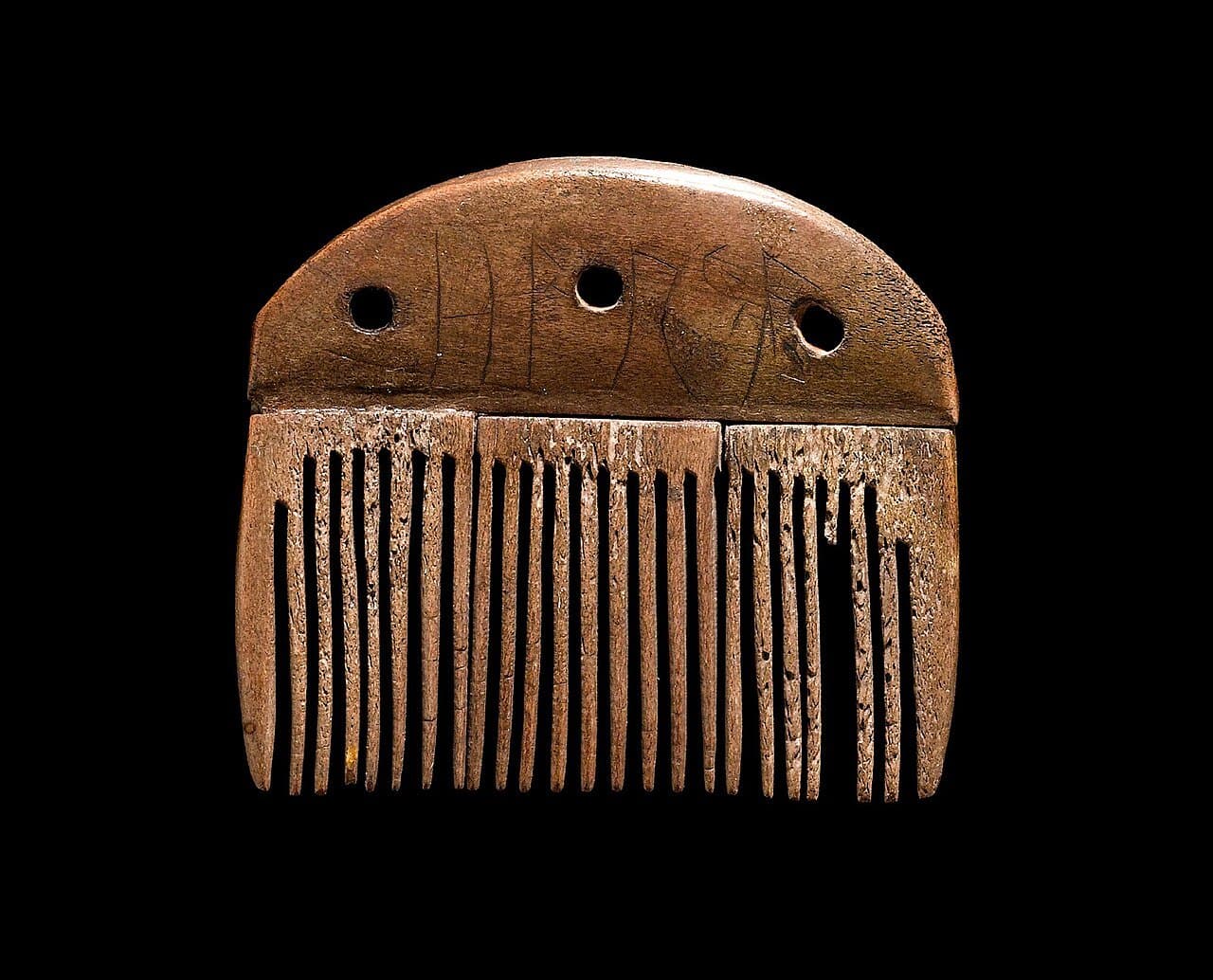
Before anyone read them for guidance, runes did what letters do: they made speech visible. People cut their names into combs, marked ownership on tools, and set inscriptions on memorial stones. One of the oldest securely dated runic finds is a comb from the bog at Vimose in Denmark, roughly 1,860 years old; stone fragments from Hole in Norway may be older still, though their find context can only be dated loosely.
Casting runes and reading them for insight is a much younger story. That does not make it worthless — but it is worth knowing which part is ancient and which part is not.
- 24characters in the Elder Futhark
- 3groups of eight runes each
- ≈1,860years old: the Vimose comb
- 9runes with no reversed form
The 24 runes at a glance
The Elder Futhark consists of 24 characters arranged in three groups of eight. The first begins with Fehu and deals, in modern reading language, with resources, force, exchange, and belonging. The second runs from Hagalaz to Sowilo and contains strong images of hail, need, ice, season, endurance, uncertainty, protection, and light. The third begins with Tiwaz and ends with Othala, moving through human commitments, growth, partnership, community, water, transition, daylight, and inheritance.
The name of the row is not an invention: it is simply how its first six characters sound, f-u-þ-a-r-k, in the same way that “alphabet” is built from alpha and beta.
These thematic summaries are editorial tools, not translations of an ancient divination chart. Use each rune page to see which claim comes from language, which comes from a surviving rune poem, and which belongs to modern practice.
| Rune | Name | Sound | Modern reading field | Reversal | |
|---|---|---|---|---|---|
| First ættthe basics of living | |||||
| 1 | Fehu | f | wealth, exchange, what can circulate | yes | |
| 2 | Uruz | u | untamed force, endurance | yes | |
| 3 | Thurisaz | th | obstacle, defense, sharpness | yes | |
| 4 | Ansuz | a | speech, understanding, insight | yes | |
| 5 | Raidho | r | journey, movement, procedure | yes | |
| 6 | Kenaz | k | light, knowledge, craft | yes | |
| 7 | Gebo | g | gift, exchange, obligation | no | |
| 8 | Wunjo | w | joy, accord, belonging | yes | |
| Second ættwhat gets in the way | |||||
| 9 | Hagalaz | h | hail, disruption from outside | no | |
| 10 | Nauthiz | n | need, scarcity, constraint | no | |
| 11 | Isa | i | ice, standstill, clarity | no | |
| 12 | Jera | j | season, harvest, the turning year | no | |
| 13 | Eihwaz | ï | endurance, holding out | no | |
| 14 | Perthro | p | uncertainty, chance, the undecided | yes | |
| 15 | Algiz | z | protection, alertness, boundary | yes | |
| 16 | Sowilo | s | light, orientation, drive | no | |
| Third ættorder and community | |||||
| 17 | Tiwaz | t | commitment, decision, reliability | yes | |
| 18 | Berkano | b | growth, beginning, care | yes | |
| 19 | Ehwaz | e | partnership, working together | yes | |
| 20 | Mannaz | m | community, the human being, mortality | yes | |
| 21 | Laguz | l | water, feeling, intuition | yes | |
| 22 | Ingwaz | ng | transition, ripeness, stored energy | no | |
| 23 | Dagaz | d | daylight, turning point, breakthrough | no | |
| 24 | Othala | o | inheritance, origin, home | yes | |
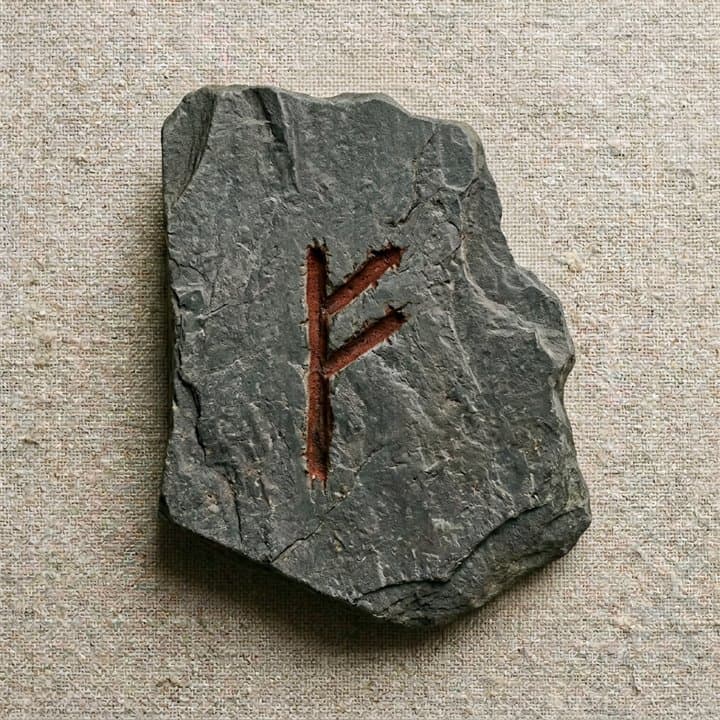 FehuSound: f
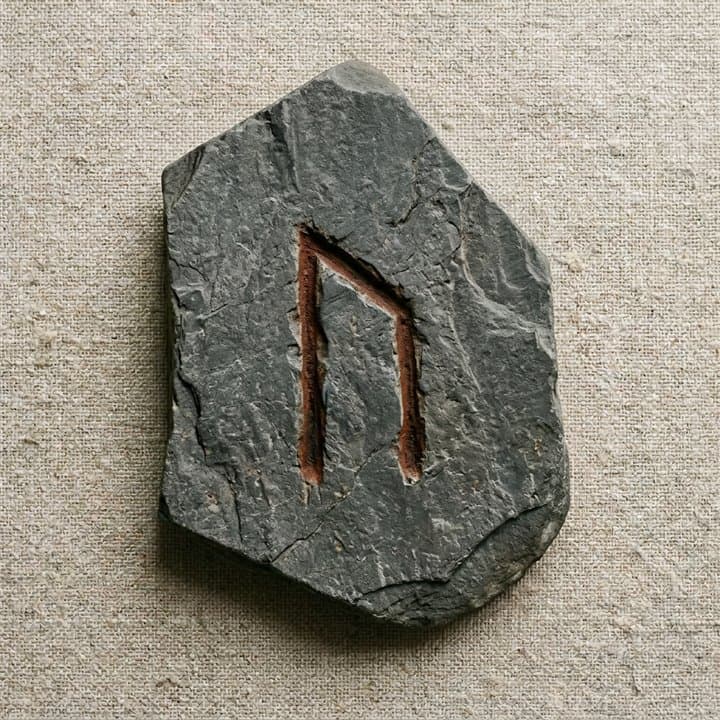 UruzSound: u
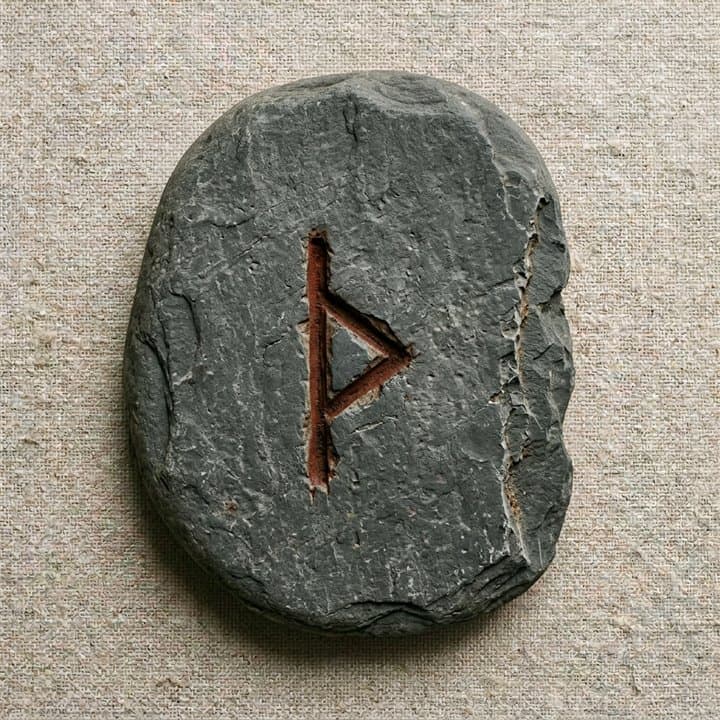 ThurisazSound: th
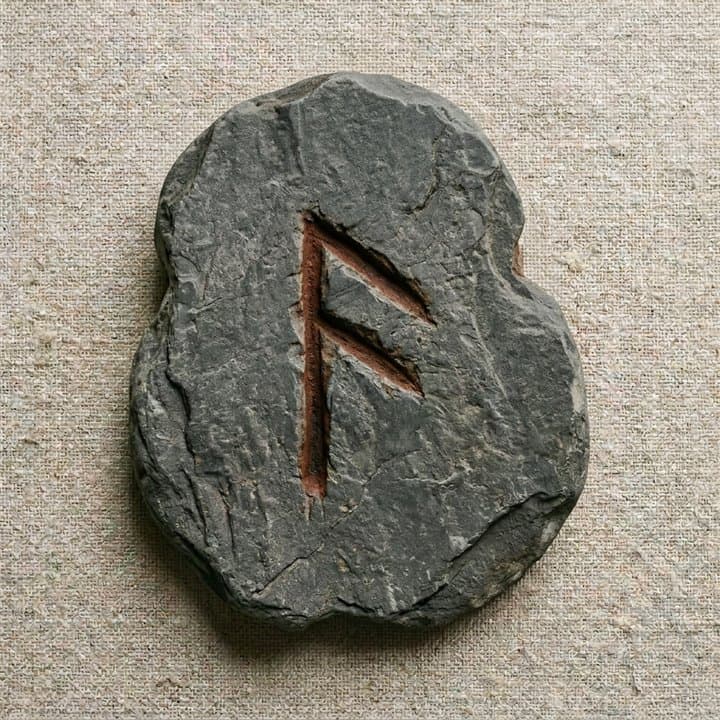 AnsuzSound: a
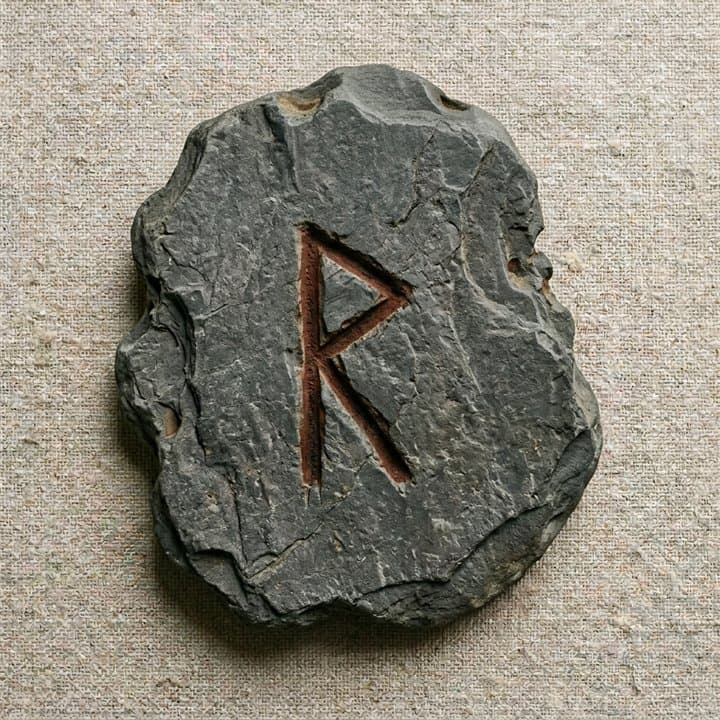 RaidhoSound: r
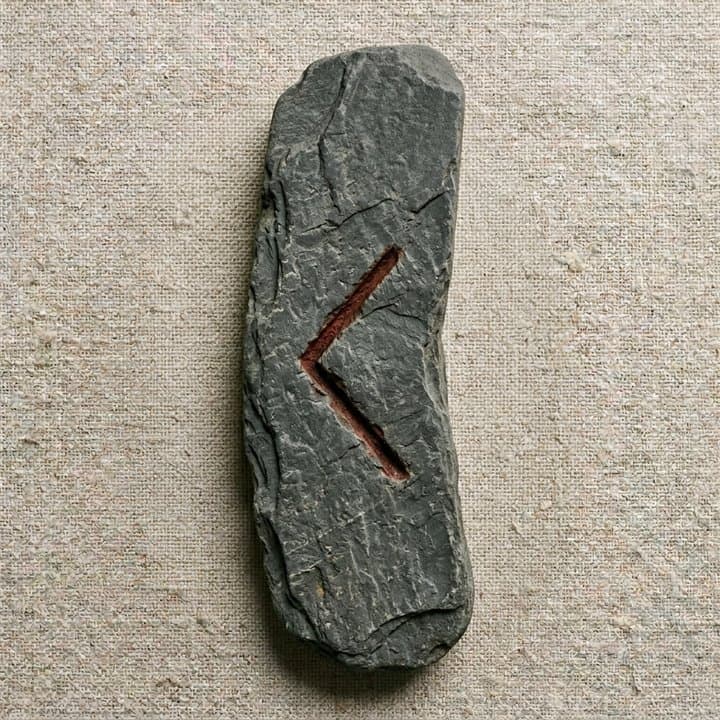 KenazSound: k
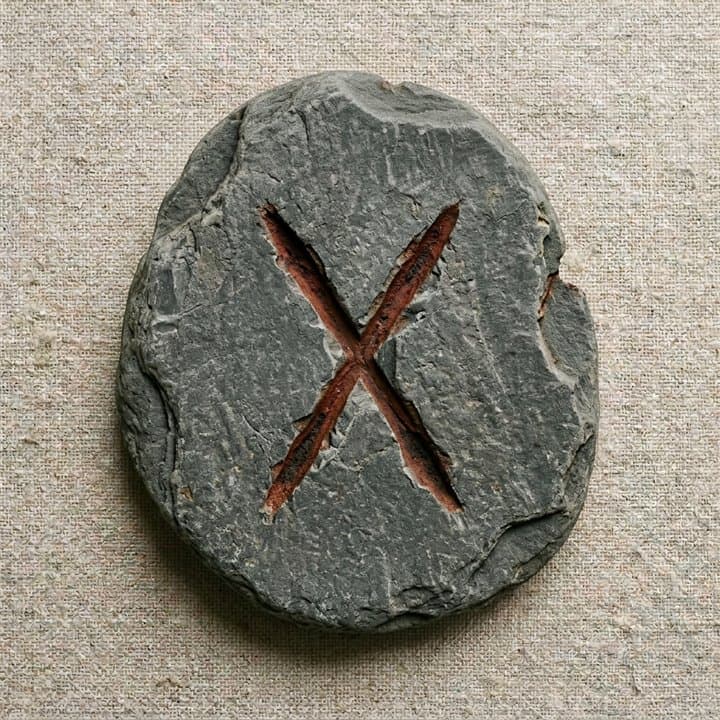 GeboSound: g
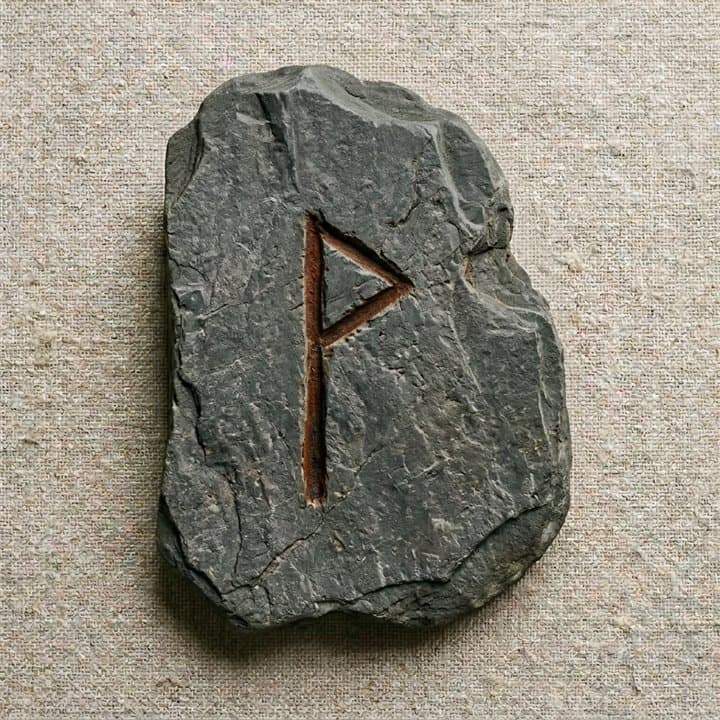 WunjoSound: w
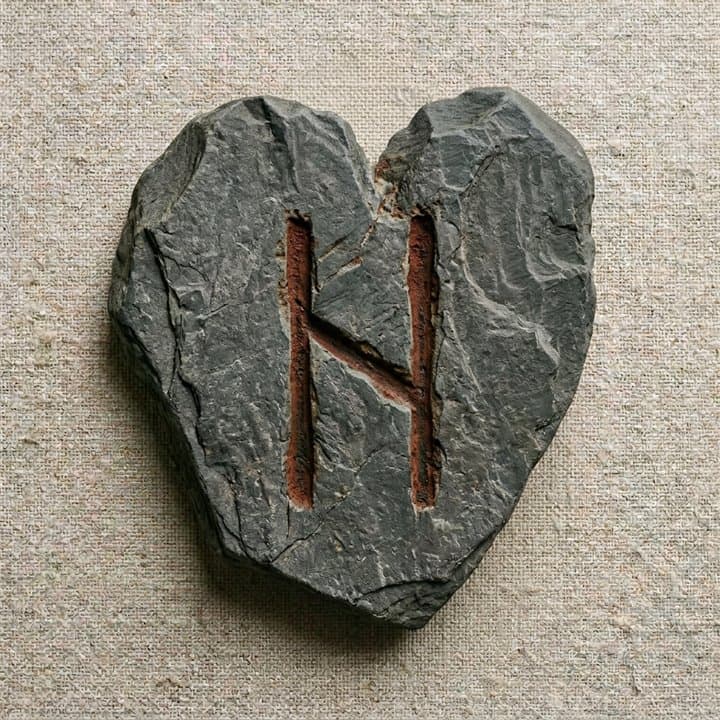 HagalazSound: h
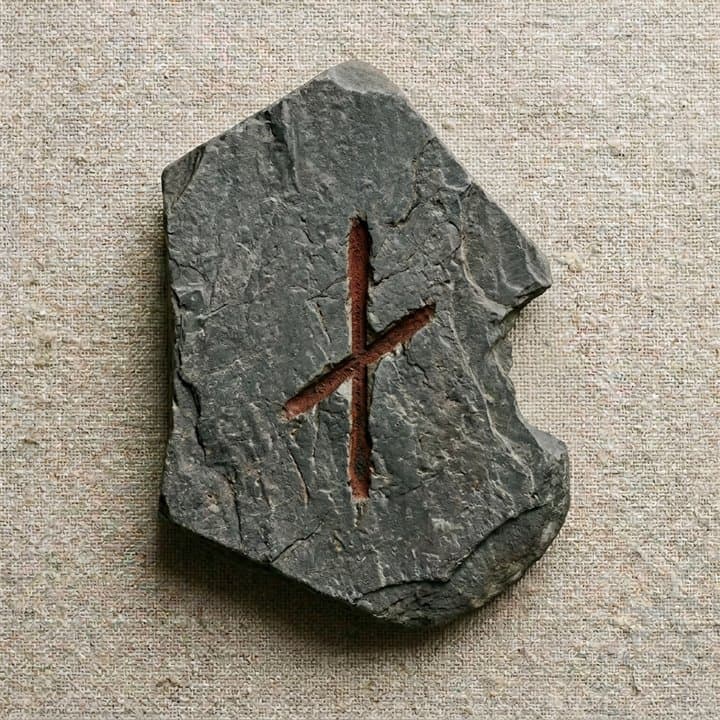 NauthizSound: n
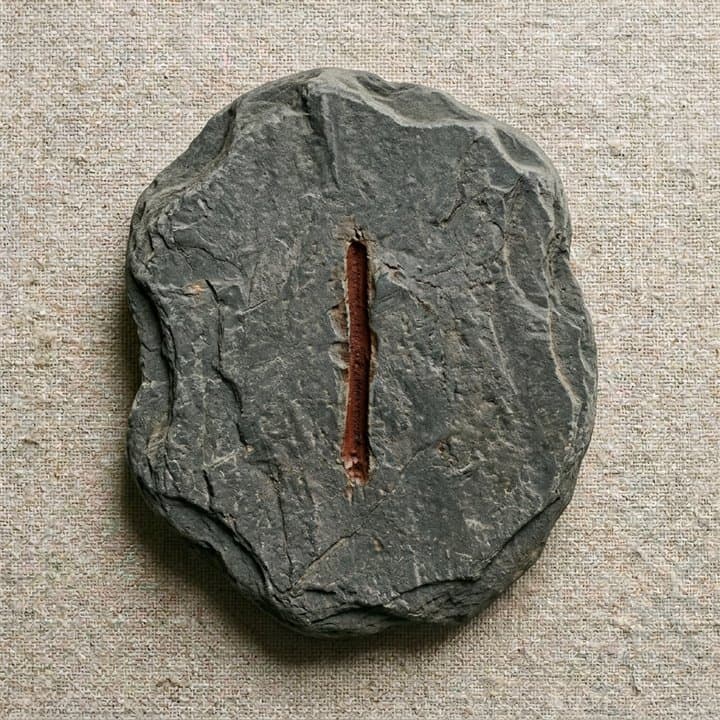 IsaSound: i
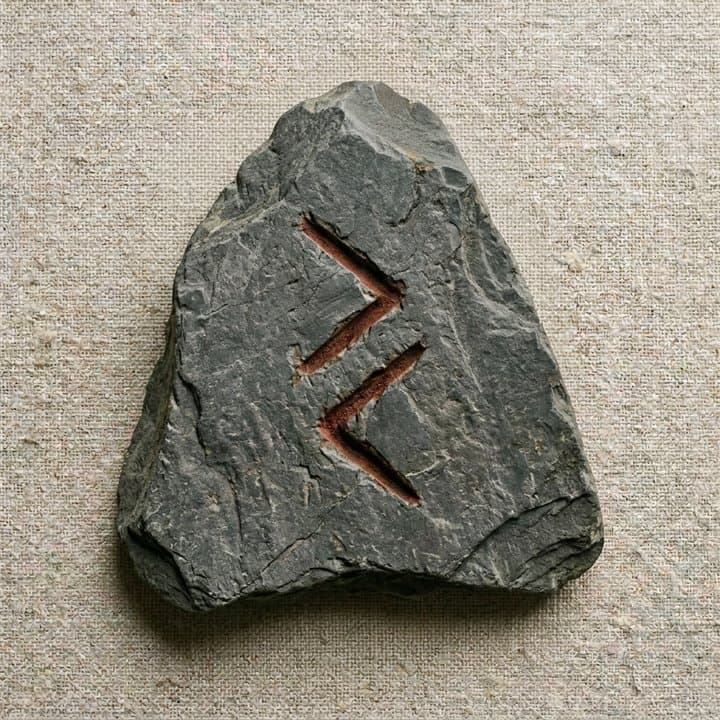 JeraSound: j
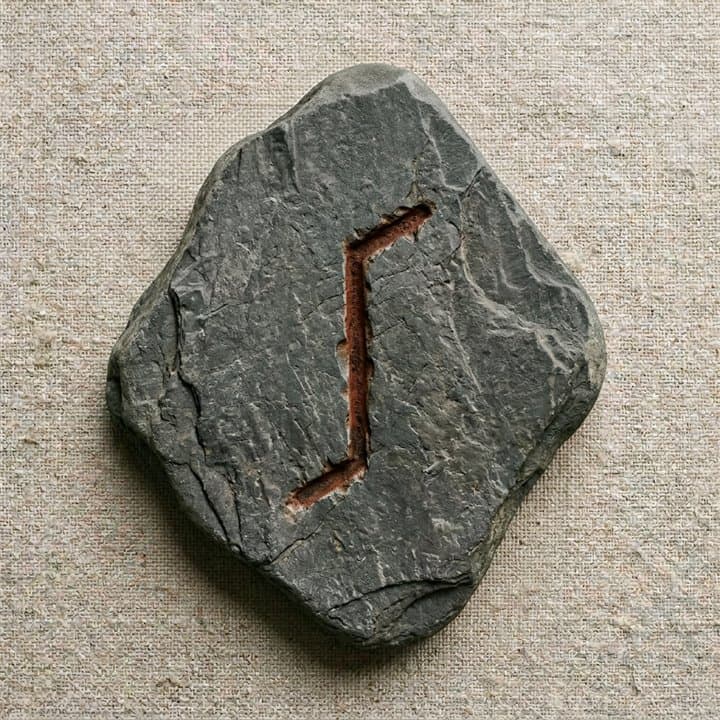 EihwazSound: ï
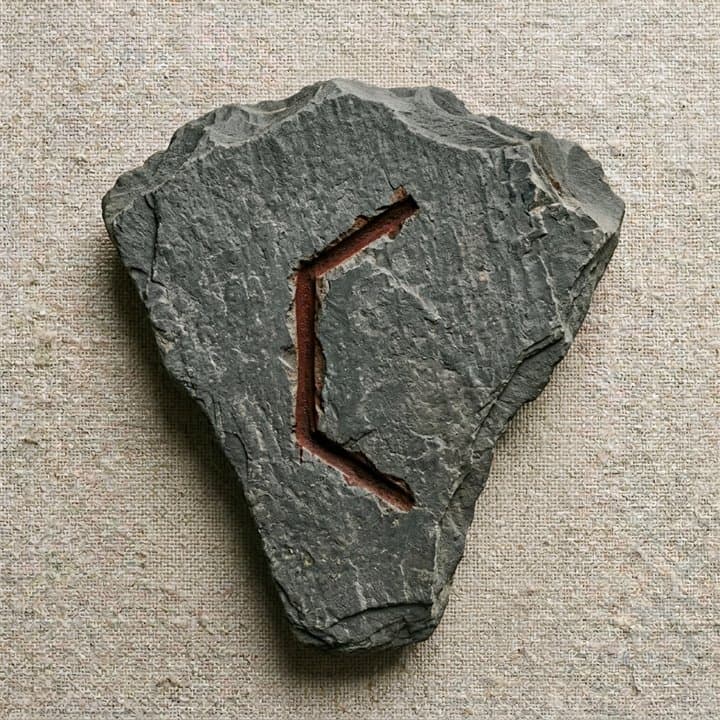 PerthroSound: p
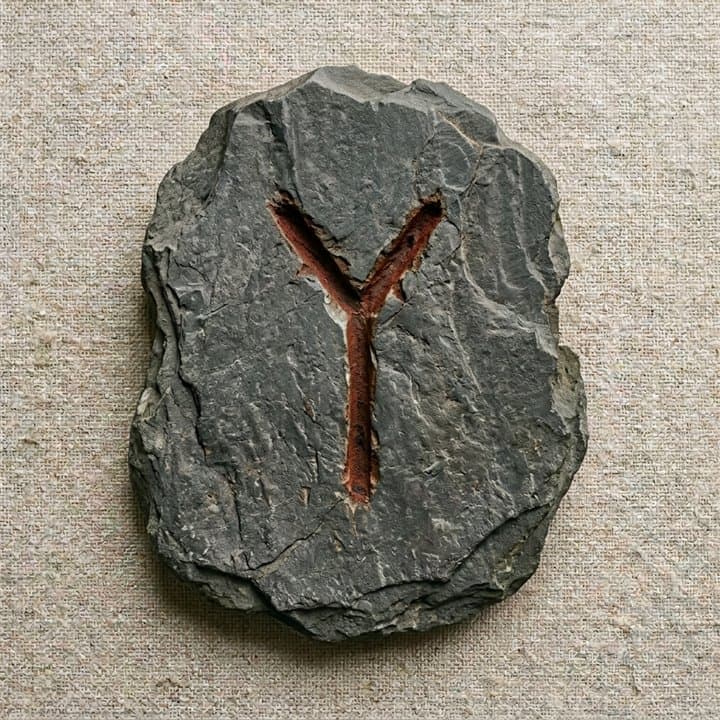 AlgizSound: z
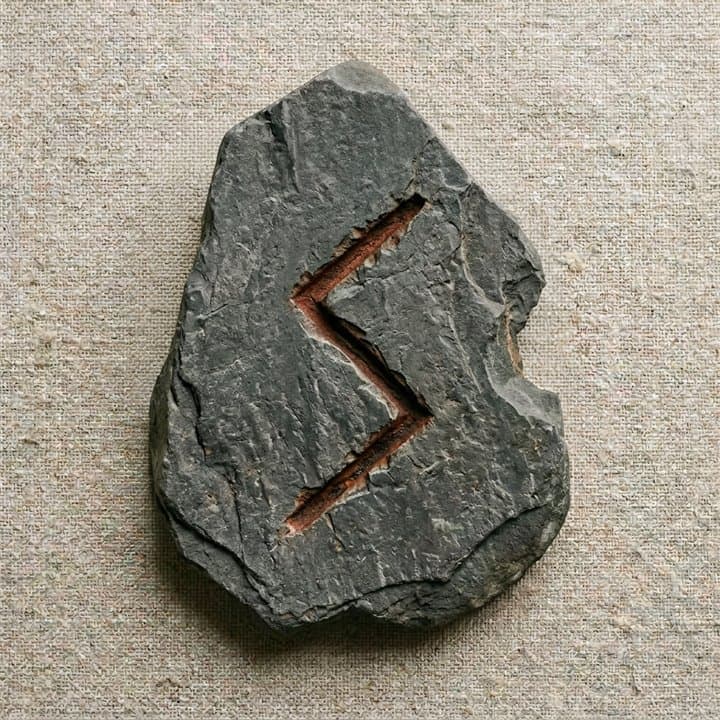 SowiloSound: s
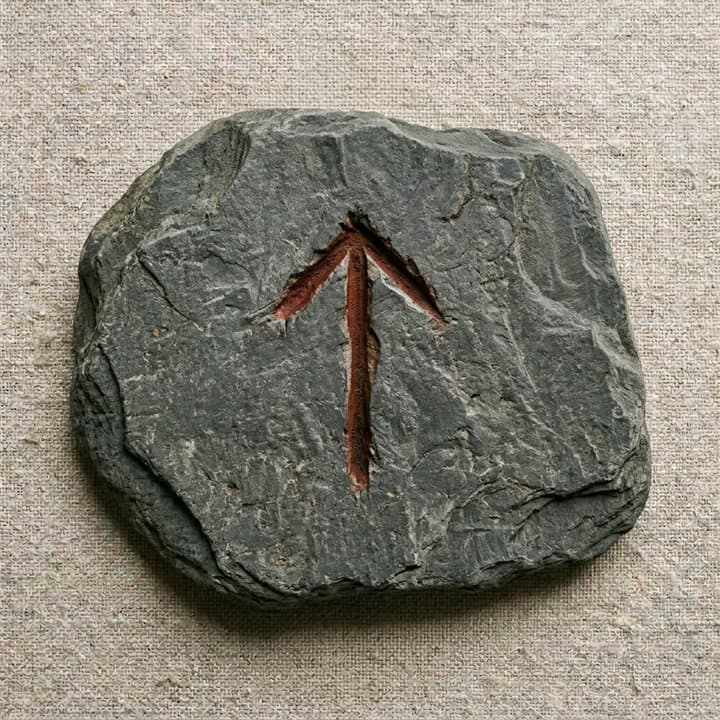 TiwazSound: t
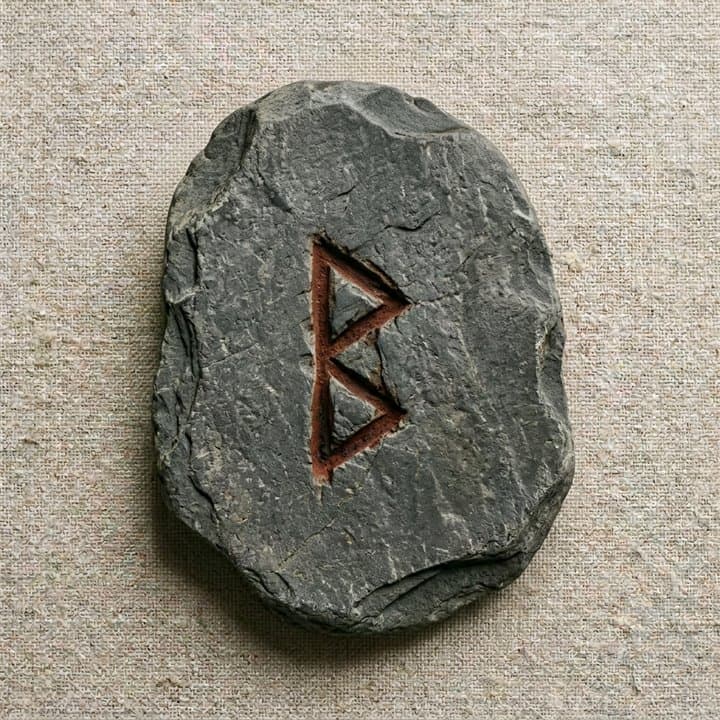 BerkanoSound: b
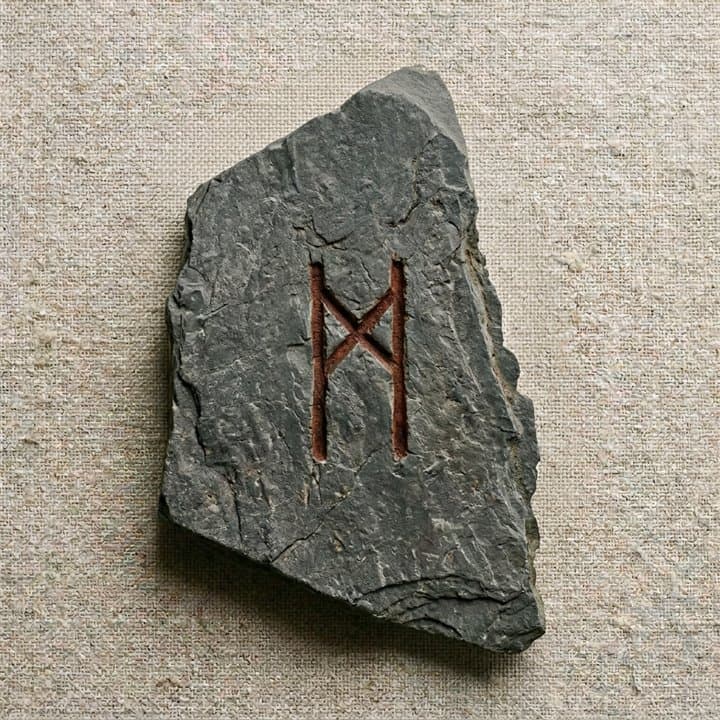 EhwazSound: e
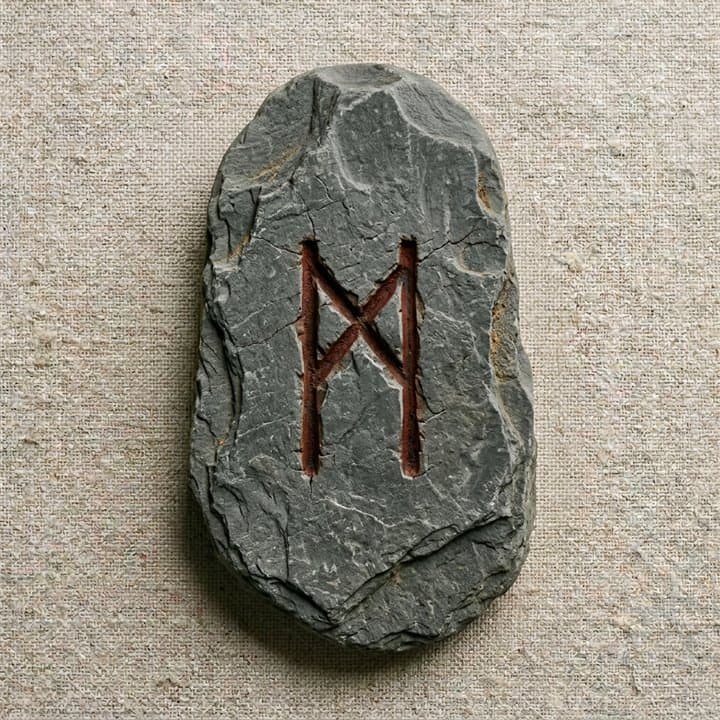 MannazSound: m
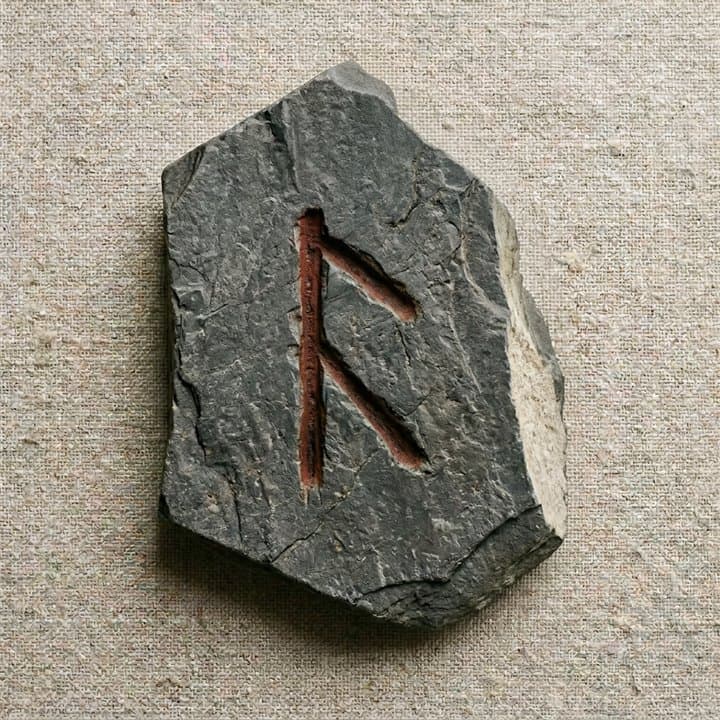 LaguzSound: l
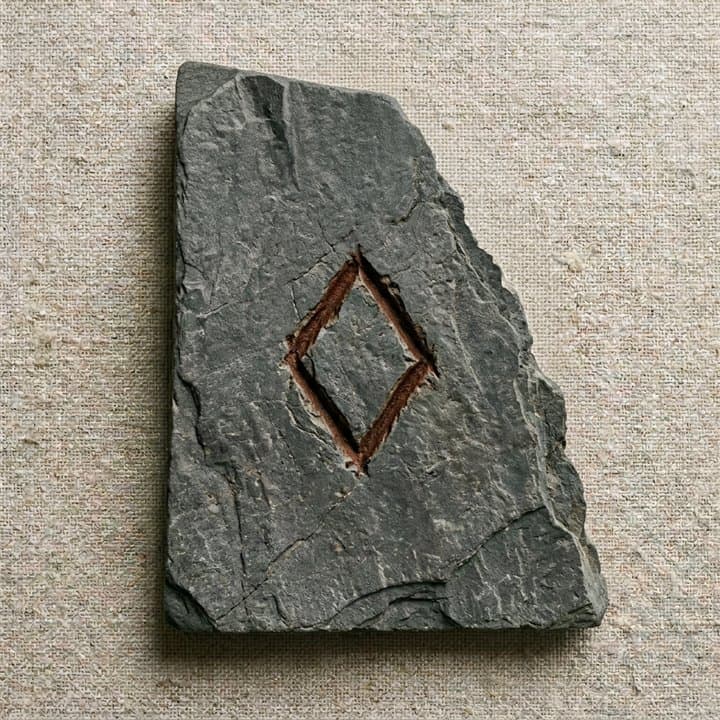 IngwazSound: ng
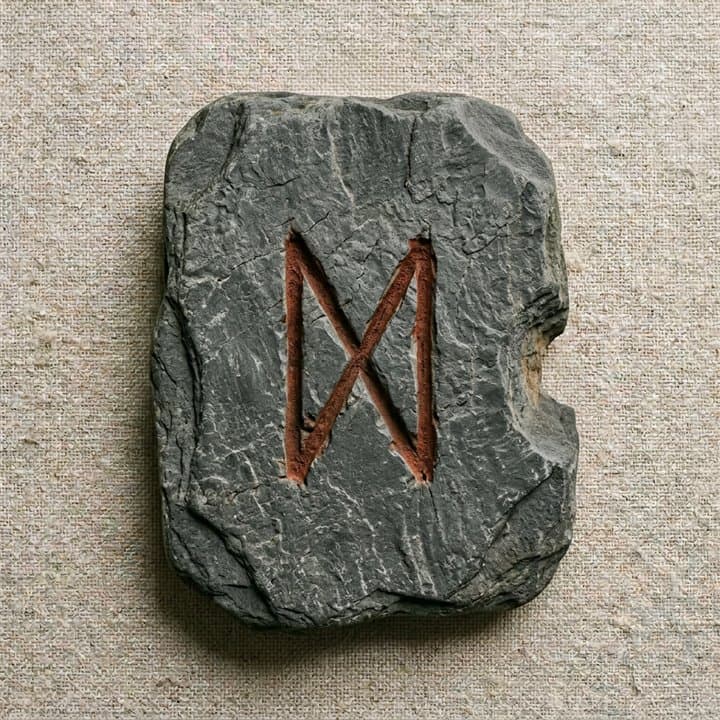 DagazSound: d
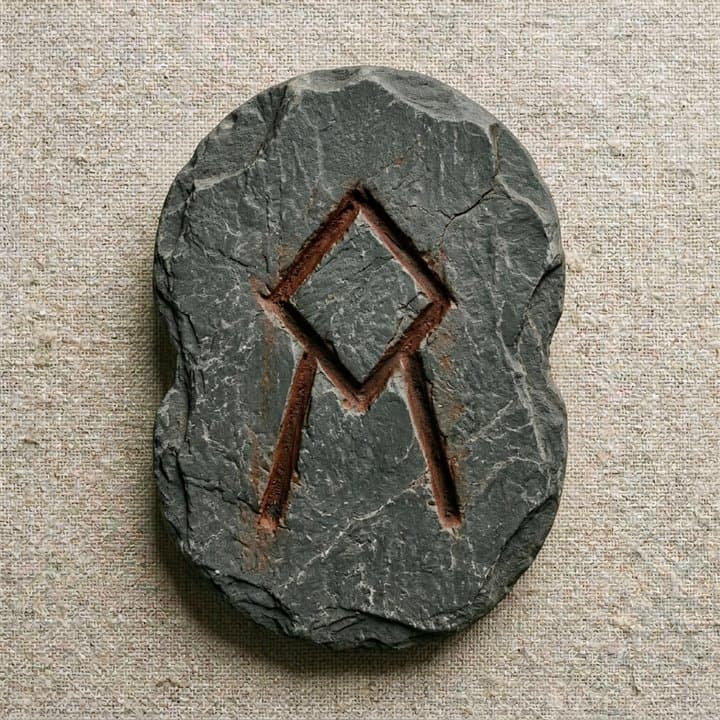 OthalaSound: o
Each tile opens the page for that rune. The stones are the photographed set from this guide; the switch shows the bare character instead.
Where the names come from
Short answer: from three poems. And from almost nothing else.
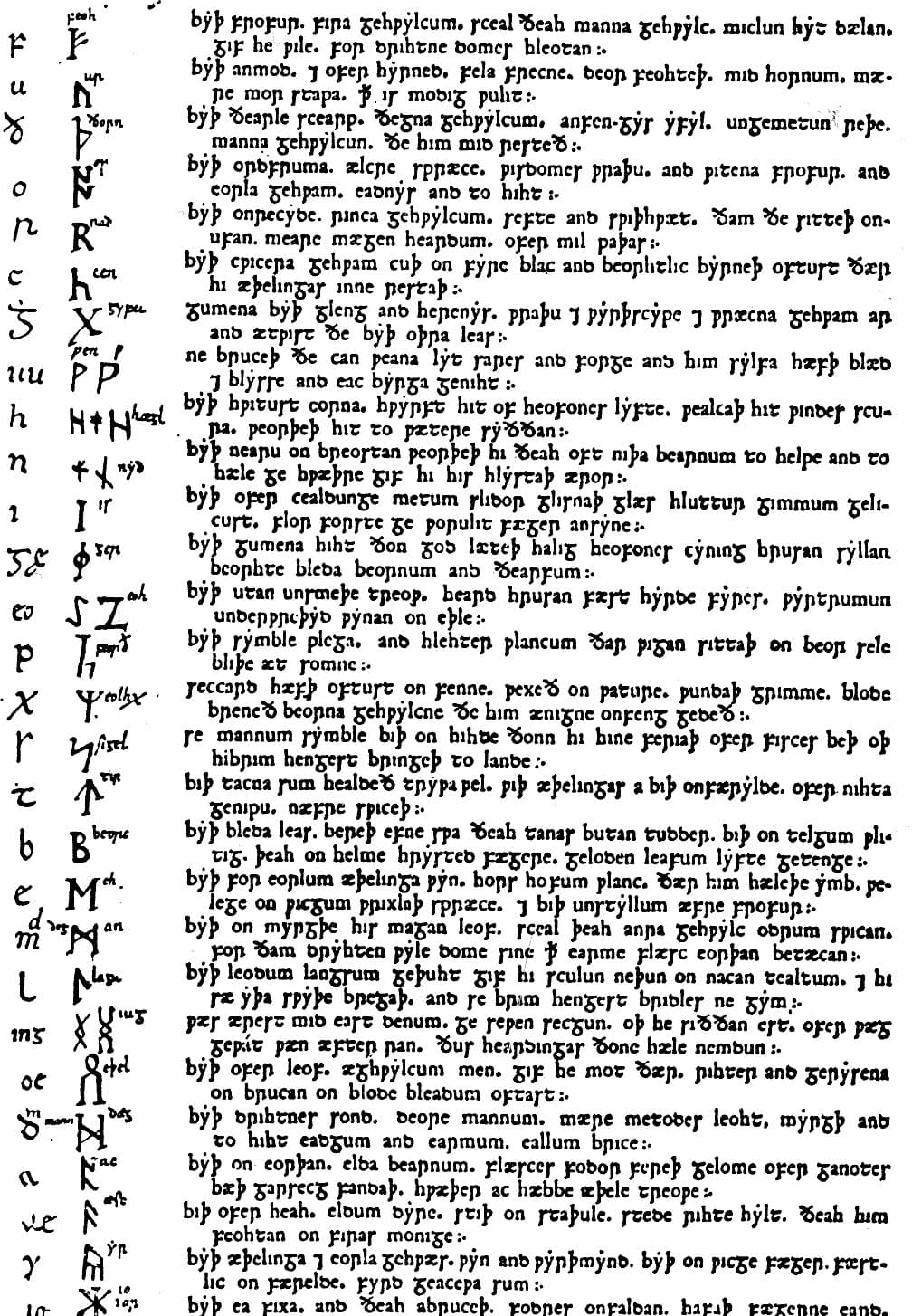
The Old English, Norwegian, and Icelandic rune poems are medieval mnemonic works associated with different rune rows and languages. They preserve valuable images for rune names. They do not document one uniform method of casting 24 Elder Futhark stones for psychological advice.
The three poems were written down centuries apart, and each survives by a different route:
- 7th centurythe Old English poem, probably composed in the 7th century. Its manuscript burned in a London library fire in 1731; the text survives only because a scholar had copied it out twenty-six years earlier;
- 13th centurythe Norwegian poem from the 13th century, preserved in a 17th-century transcript;
- from about 1500the Icelandic poem, preserved in manuscripts from about 1500 onwards.
Three things follow from that, and all three matter when you read a meaning.
First: the texts are younger than the runes. Roughly five hundred years separate the Vimose comb from the Old English poem. The names are handed down, but not first-hand.
Second: the two Nordic poems describe a shorter row. By the Viking Age the futhark had been reduced to 16 characters, so for eight runes of the Elder Futhark only the Old English verse exists — at Gebo, Wunjo, Eihwaz, Perthro, Ehwaz, Ingwaz, Dagaz and Othala the evidence is thinnest.
Third: the poems disagree with each other. At Ansuz the Old English poem means a mouth, the Norwegian an estuary, and only the Icelandic one names the god Odin. That is not a flaw in the record — it shows how much room these names leave.
The distance between the earliest inscriptions and the poems does not make modern reflection worthless. It makes labeling essential. “Attested” should point to checkable evidence; “reconstructed” should identify linguistic scholarship; “modern interpretation” should say plainly that the reading is contemporary.
And one rune came off worst of all: nobody knows what Perthro meant. There is no related word secure enough to anchor it to.
The three ættir — and what was invented about them
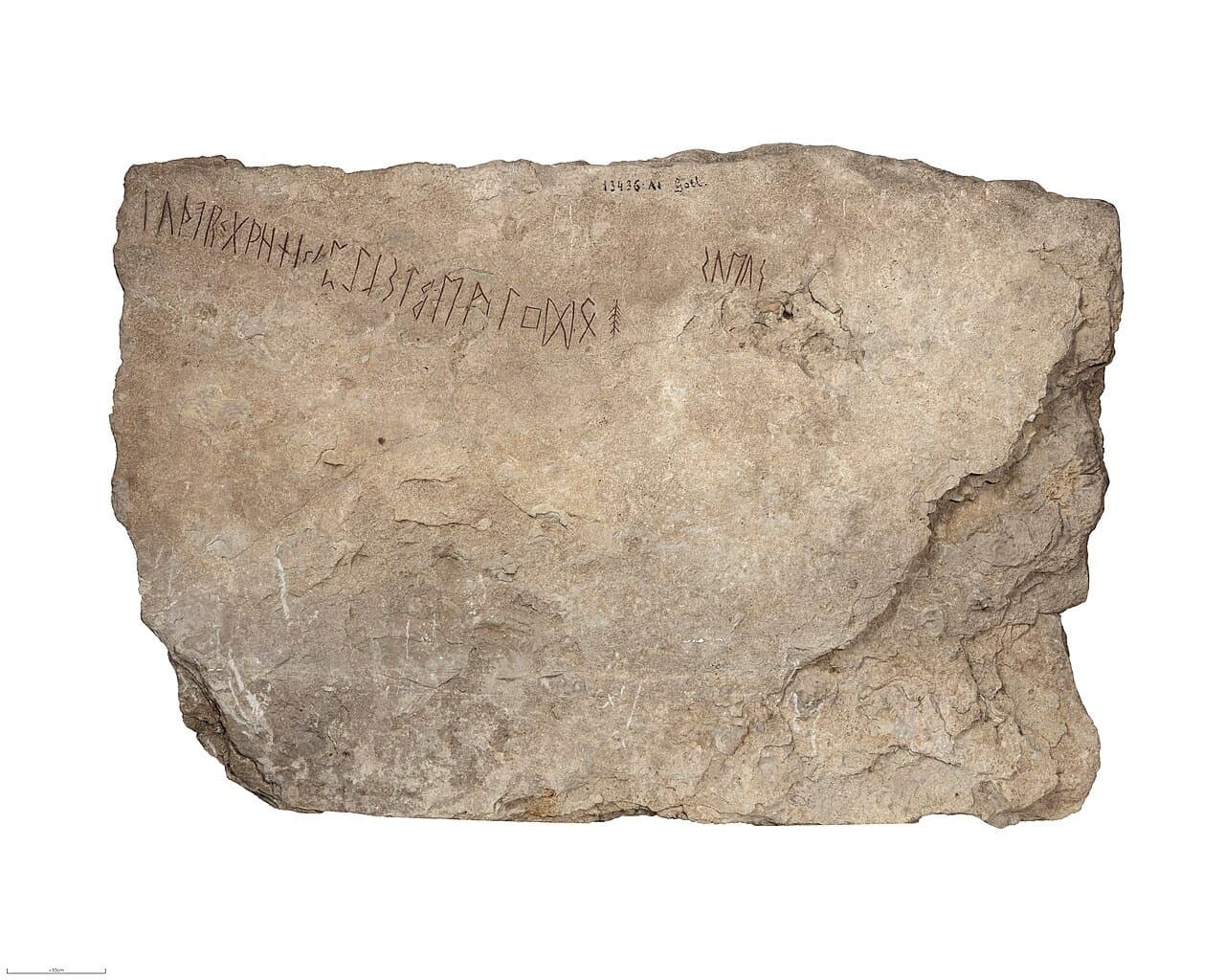
The division into three groups of eight is old and well attested. The Kylver stone from Gotland, carved around 400 CE and holding the oldest complete rune row we have, carries the sequence in this order, and on the Vadstena bracteate from the 6th century the three groups are even separated by dots.
What you will read almost everywhere in addition: that the first group is “Freyr’s ætt”, the second “Hagal’s” or “Heimdall’s ætt”, and the third “Tyr’s ætt”.
Those names are not attested. No medieval text explains what the ættir meant or what they were called. Tying them to individual gods comes from twentieth-century rune practice. It is tidy, it is widespread — and it is new.
That is why these pages simply say first, second and third ætt. Not out of pedantry, but because the difference between an archaeological find and an attribution from the last century is exactly what you want to know when you take up runes.
The order is striking all the same. The first group circles the basics of living, the second everything that gets in the way, the third order and community. Whether that was deliberate, nobody knows. But it reads like an arc.
How to read a rune meaning
A rune does not mean one thing. It marks a field, and where you land inside that field is decided by the question you brought.
Take Fehu, the rune of movable wealth. In a question about work it leans towards resources, income and the means to act. In a question about family the same rune leans towards a quarrel over what somebody left behind. That is not a contradiction and not a free-for-all — it is one idea in two settings.
- Question about work“resources, income, the means to act”
- Question about family“a quarrel over what was left behind”
- One field, two settings.
Read the rune’s historical image first, then the modern prompt. Reduce the result to one observation and one action within your control. If a claim concerns another person’s hidden motives, a medical outcome, law, money, or safety, stop treating the rune as evidence and use the appropriate source.
Three things help when you read:
The neighbors. Runes qualify each other. Hagalaz beside Jera reads as damage falling in a year that still yields something. The same rune beside Nauthiz reads as a shortage that lasts.
The position. In a layout every place has a job — what was, what is, what is still open. The same rune says different things in different places.
The question. A good question is open and about you. “Will I get promoted” is a poor question, because it asks for a report from the future. “What is my job actually hanging on right now” is a good one, because it points at something you can act on.
Upright and reversed — and why nine runes cannot do it
Most runes can be read the right way up or upside down, and the reversed position turns the statement around or shifts it towards the difficult.
- uprightreversedTurned over, Fehu looks different: the orientation is readable, so the reading can flip.
- uprightturned — identicalTurned over, Gebo is still Gebo — there is no reversed form here.
Nine runes in this set are treated as symmetrical: Gebo, Hagalaz, Nauthiz, Isa, Jera, Eihwaz, Sowilo, Ingwaz, and Dagaz. They receive no separate reversed reading. For the other signs, reversal is an optional modern convention rather than a feature established by the poems.
For those nine the neighboring runes do the work instead: whether a disruption wrecks something or clears the ground shows in what lies next to it.
None of that makes reversal useless. It makes it a convention rather than a tradition. Anyone who prefers to work without reversals is doing nothing wrong — if anything, they are closer to the sources.
The 25th rune that is not one
The Elder Futhark has 24 characters. The blank stone associated with some modern sets was introduced by Ralph Blum in 1982; it is not a twenty-fifth historical rune. On this site it is optional and off by default.
It travels under several names — the “wyrd rune”, the “blank rune”, “Odin’s rune” — and is said to stand for fate, the unknown, or free will. Blum’s rune book sold extremely well, which is why the extra stone now sits in so many sets sold today.
No find, no inscription and no poem knows a blank stone. You can still use it: it is a serviceable image for “here I do not know”, and it is honest about that. You should only not believe that you are doing something Germanic with it.
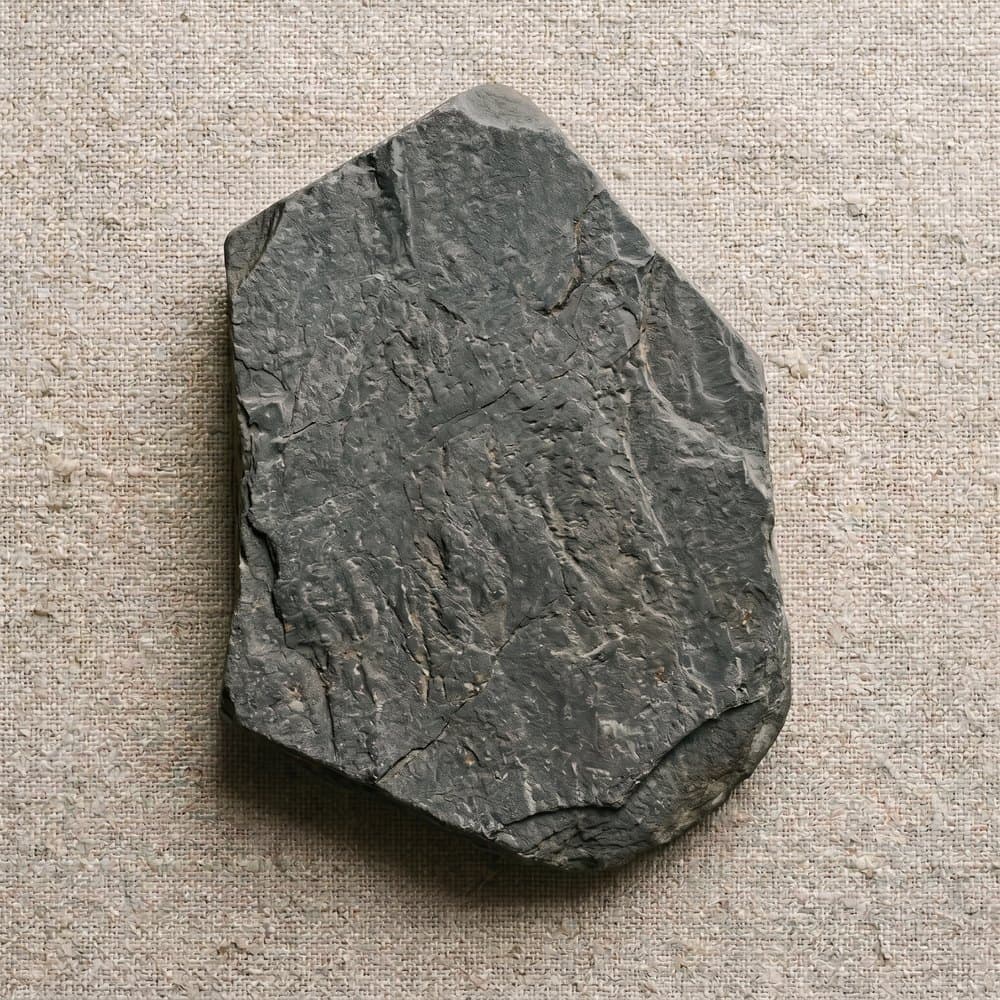
1982introduced by Ralph Blum — not a historical rune
What runes are not
A few things that get claimed constantly in this field and are simply not true.
- Myth
There is no such thing as “Celtic runes”. Runes are Germanic. The Celts had their own script, ogham, which looks and works completely differently. Anyone selling you “Celtic runes” or “druid runes” is selling you an invention. In detail: Celtic runes — setting the record straight.
- Myth
“Viking runes” are not the Elder Futhark. The Viking Age wrote in the Younger Futhark with only 16 characters. A name in genuine Viking-Age runes needs that row, not the 24 on this page. The difference is considerable: the three rune rows.
- Fact
Runes are not symbols, they are letters. Each one carries a sound value. You can write with them, and that is exactly what they were made for. How that works and where the traps are: the runic alphabet.
- Fact
Runes have no measurable effect. There is no evidence that a carved character does anything by itself. What runes can do is different: they give a question a shape and make you think it through. That is less than some people promise, and more than it sounds.
Four evidence layers to keep separate
Start with the character and sound value. An inscription uses a rune as writing, and the surrounding language determines how that sound works. Next comes the name: some names are securely preserved, while others are reconstructed from related languages or disputed forms. Third are the rune poems, medieval texts that explain names through memorable images. Finally there is modern interpretation, including upright and reversed readings used for reflection today.
These layers can inform one another, but they are not interchangeable. The fact that Fehu’s name concerns cattle does not prove an ancient financial oracle. A poem about ice does not establish a clinical meaning for emotional blockage. A modern prompt may be useful while remaining modern.
A source-first reading example
Suppose a reading produces Jera in a work question. The sound and place in the row identify the character. The historical name connects year and harvest, while the poems describe hoped-for yield that depends on conditions and benefits rich and poor. A modern prompt can then ask which season a project has reached, what result is actually ready, and what still depends on factors outside your control. The rune does not prove that a promotion or payment will arrive.
Use the same sequence for every sign: identify it, inspect its attested image, label the modern bridge, and end with a decision or observation you can verify.
Frequently asked questions
Are rune meanings historically fixed?
No. Sound values and inscriptions are historical evidence; the poems provide later images; most divinatory meanings and all reversed meanings are modern conventions.
Which rune stands for what?
The table above lists all 24 with their reading field. Protection is traditionally Algiz, money Fehu, partnership Ehwaz, and a fresh start Berkano.
What is the strongest rune?
The question is asked often but cannot be answered without assuming that runes have a measurable effect. The best known is Algiz. The most important in the row is Fehu, because it stands first and gives the whole futhark its name.
How many runes are there?
The Elder Futhark has 24. The Younger Futhark of the Viking Age has 16, and the Anglo-Saxon futhorc up to 33. The “25th rune” is a modern addition from 1982.
Are these Viking runes?
The Elder Futhark predates the Viking Age. Much of the Viking Age used the 16-character Younger Futhark.
Can a rune be activated, blessed or charged?
These ideas come from twentieth-century rune magic and are not historically attested. In the sources runes are carved, not charged; the few medieval passages describing a concrete use sit in the Eddas, most tangibly at Nauthiz and Tiwaz.
Can runes predict the future?
No. They can structure reflection, but they do not provide reliable forecasts or facts about another person.
Where can I cast runes?
Use the rune reading tool and keep its modern conventions switched on or off explicitly.
How do I write a name in runes?
Start with pronunciation, not spelling, in the rune name translator. Modern English sounds often require approximation.
Are any of these runes politically loaded?
Three of them are. Algiz, Sowilo and Othala were taken up by the Nazi movement and are still used by far-right groups today, sometimes in particular graphic variants. The historical sign does not carry that meaning on its own — form, combination and context decide. Germany and Austria restrict some of those uses by law. Before a tattoo or a public design, check rune tattoos.
Browse all 24 runes
- First ættthe basics of livingFehuUruzThurisazAnsuzRaidhoKenazGeboWunjo
- Second ættwhat gets in the wayHagalazNauthizIsaJeraEihwazPerthroAlgizSowilo
- Third ættorder and communityTiwazBerkanoEhwazMannazLaguzIngwazDagazOthala
Cast the runes → Rune reading Your name in runes → Rune translator Look up the sound values → Runic alphabet Where the runes come from → History
Editorial note: Rune reading is not a science. These pages separate what is attested from what is modern practice — and say so wherever the two part company.
Buying a rune set: wood, stone, or handmade
If you want to hold the 24 signs instead of only reading about them, there are three routes. They differ more than the product photos suggest — above all in how the pieces feel while you mix them face down, and whether the marks are still legible a year later.
- Wood
The traditional material: light, warm, quiet in the pouch. Beech and ash take a carved line cleanly. Cheap sets are often only printed, and print wears off with handling.
- Stone
Heavier in the hand, and it settles where it lands instead of rolling. On semi-precious stones the sign is usually engraved and filled with colour, which outlasts paint on a polished surface.
- Handmade
The cheapest and most personal option: 24 flat pebbles or wooden discs, a burner or red ochre, a cloth bag. An afternoon of work — and you will know every sign by heart afterwards.
What to check before you buy
- 24 pieces, not 25
The blank rune was introduced by Ralph Blum in 1982 and is not part of the Elder Futhark. A 25-piece set is not wrong, but it is a modern addition.
- Carved, not printed
Carved or engraved signs survive years in a pouch. Printed ones do not.
- One row, not a mixture
Some budget sets mix sign forms from the Elder and Younger Futhark. Which row belongs to which period is set out here: Rune alphabets compared
- Pouch or cloth included
You need both anyway to mix the pieces face down, and buying them separately usually costs more.
One honest closing note: a bought set does not make a reading more accurate. It makes it slower — and that is the actual gain.