
Elder Futhark · rune 8 of 24
Wunjo ᚹ
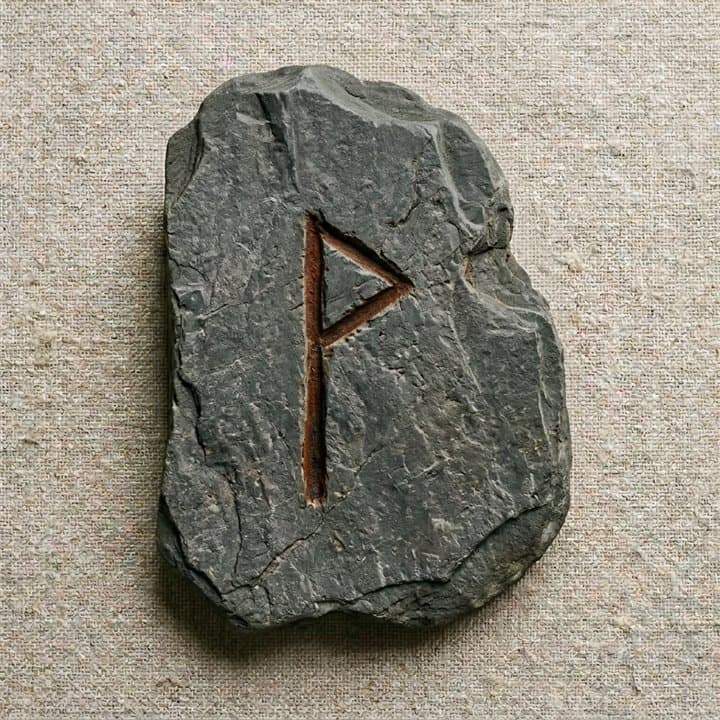
| Character | ᚹ (Unicode U+16B9) |
| Name | Wunjo · Old English wynn |
| Sound value | w |
| Number | 8 of 24 |
| Aett | first (last rune) |
| Reversal | yes |
Joy · belonging · enough support to breathe
Wunjo survives in the Old English rune poem, where joy belongs to the person who knows little want, sorrow, or anxiety and who possesses prosperity and a good dwelling. The verse does not describe permanent cheerfulness. It ties well-being to conditions: need is limited, grief is bearable, and a person has a place within a supportive household.
Modern interpretations often call Wunjo the happiest rune. A more useful reading asks what makes joy possible and who shares it. Pleasure that depends on denial, exclusion, or unsustainable spending does not match the poem’s grounded picture of sufficiency.
The name and its history
Reconstructed wunjō means joy or delight. The root has relatives in German Wonne and English winsome. Only the Old English rune poem preserves a verse for it because the character was not retained as a separate rune in the Younger Futhark.
The sign had an important life outside runic symbolism. As the letter wynn, Ƿ, it was used for the w sound in ordinary Old English manuscripts, including the manuscript tradition of Beowulf. It was later replaced by double u, the ancestor of modern W.
What the rune poems emphasize
The surviving verse defines joy by the conditions around it. A person enjoys it when sorrow, pain, and anxiety are limited and when prosperity, happiness, and protection are sufficient. The poem describes a sustainable state, not an ecstatic peak.
That restrained definition helps separate evidence from modern optimism. Wunjo can support reflection on belonging, relief, and enoughness, but it is not a historical promise that every conflict will end happily. Ask which conditions of safety and mutual support make genuine ease possible.
Upright
Upright Wunjo points to genuine ease, welcome, or a moment when people and circumstances fit. It can mark celebration, restored harmony, or satisfaction earned by completing something together.
Let the good result be specific. Name what is working, thank the people involved, and protect the conditions that produced it. Joy becomes more credible when it can coexist with ordinary difficulty rather than pretending difficulty has vanished.
Reversed
Reversed Wunjo can frame isolation, forced positivity, a group harmony maintained by silence, or pleasure that leaves a practical need untouched. It may ask whether you are performing happiness for an audience.
Reversal is modern. Use it to examine belonging and unmet need, not to predict sadness. Sometimes the corrective action is not “cheer up” but rest, repair, or asking to be included honestly.
Wunjo in four areas of life
Love. Look for comfort that permits honesty. Agreement is less valuable than a relationship in which disagreement remains safe.
Work. Mark a shared success and identify why the collaboration worked. Morale cannot replace fair workload or clear expectations.
Money. Enjoyment belongs in a budget, but Wunjo does not authorize spending that creates tomorrow’s distress.
Well-being. Social connection and rest may support well-being, while persistent low mood deserves appropriate professional support.
Neighboring runes
With Gebo, joy meets the gift. The pair can describe a healthy social exchange in which generosity strengthens connection without creating hidden debt.
With Nauthiz, joy meets need. It may show relief after strain, or a pleasant surface that is masking a real shortage.
As a daily rune
Notice one source of real ease today. Strengthen the condition that makes it shareable.
Choose an action small enough to complete: express thanks, invite someone in, finish a loose end, or allow a good moment to remain uncomplicated.
Frequently asked questions
What does the Wunjo poem say?
It links joy with limited want and sorrow, prosperity, and a good dwelling. Only the Old English poem preserves this rune.
Is Wunjo always positive?
No symbol removes context. Upright Wunjo emphasizes workable joy; a modern reversed reading can expose exclusion, denial, or strained harmony.
Can Wunjo predict happiness?
No. It cannot guarantee an emotional outcome. It can help you identify conditions that support belonging and relief.
What does reversed Wunjo mean?
It can point to loneliness, forced cheer, or harmony that avoids a necessary truth. The reversed convention is modern.
Was Wunjo used as an ordinary letter?
Yes. Its descendant wynn, Ƿ, represented the w sound in Old English manuscripts before double u developed into the modern letter W.
To reflect on
What practical condition supports your current joy? Who is included in it? If the pleasant surface disappeared, what relationship or resource would still remain?
Explore all 24 rune meanings, compare the main runic alphabets, try a rune reading, or see how a name can be approximated in runes.
Editorial note: Rune reading is a modern reflective practice. This page separates linguistic and historical evidence from contemporary interpretation.