
Elder Futhark · rune 9 of 24
Hagalaz ᚺ
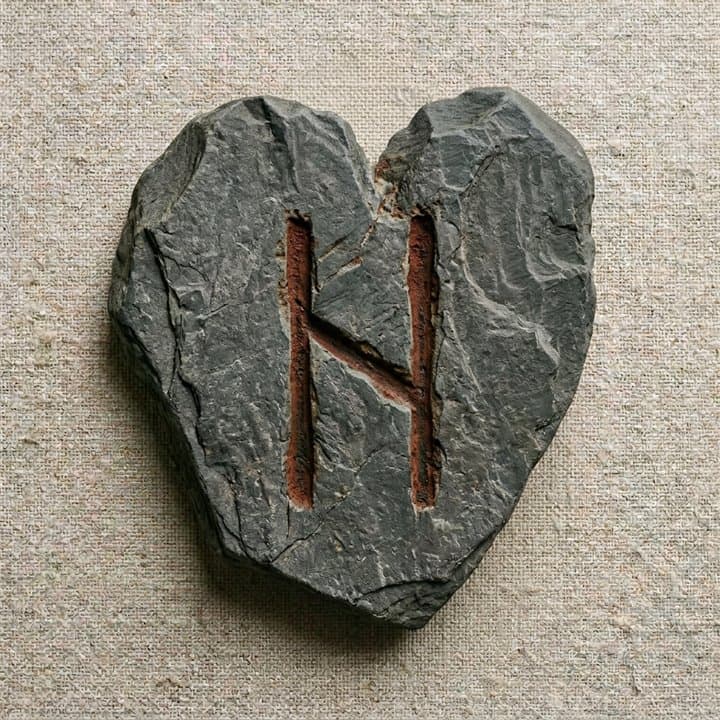
| Character | ᚺ (Unicode U+16BA) |
| Name | Hagalaz · Old English hægl · Old Norse hagall |
| Sound value | h |
| Number | 9 of 24 |
| Aett | second (first rune) |
| Reversal | no — axially symmetrical |
Disruption · exposed structure · change outside your control
All three rune poems identify this rune with hail. The Old English poem calls it the whitest grain, whirled from the sky before it turns to water. The Norwegian and Icelandic verses also stress cold grain or sleet driven by wind. Hail arrives suddenly, has a hard shape for a short time, and then becomes water. The source image supports disruption and impermanence more strongly than any claim of punishment.
The name and its history
Haglaz or hagalaz means hail. Old English hægl, Old Norse hagall, and modern English hail belong to the same word family, so the basic name is unusually secure.
The form varies historically. Elder Futhark inscriptions use both a one-bar form, ᚺ, and a two-bar form, ᚻ. The distribution can help scholars discuss where an inscription belongs; Scandinavian evidence favors the one-bar form. Variant letter shapes are part of writing history, not separate oracle meanings.
What the rune poems emphasize
All three rune poems call hail a kind of grain, an apt and bitter image for ice that resembles a crop while damaging crops. The Old English poem calls it the whitest grain and describes wind driving it through the air. The Nordic verses emphasize cold and a shower of sleet.
The Old English verse ends with a decisive observation: hail becomes water. The disturbance does not remain in its original form. That line supports a modern focus on disruption and aftermath, but it does not guarantee that damage will be harmless or automatically repaired.
Upright
Hagalaz points to an interruption that reveals what a plan can withstand. The event may be inconvenient, damaging, or simply outside your timetable. Its practical value lies in separating the impact from the story you tell about why it happened.
Assess what changed, what remains usable, and what needs protection now. A resilient response is not pretending the hail missed; it is taking inventory after the shower and revising the structure that failed.
What the rune says — and why there is only one position
The displayed Hagalaz form is axially symmetrical, so turning the stone does not create a distinct visual position. This guide therefore uses one reading rather than assigning a separate reversed meaning.
One position does not mean one emotional tone. Hail can interrupt, damage, expose weak protection, and then melt. Explore those possibilities through the question and neighboring runes instead of inventing an orientation that the sign does not show.
Hagalaz in four areas of life
Love. An unexpected event may expose how conflict and repair actually work between you. Address the impact before debating blame.
Work. Test the fragile dependency in a plan and create a fallback. Urgency should clarify priorities, not erase them.
Money. Review emergency reserves, insurance, or concentration risk. Hagalaz does not predict a loss.
Well-being. Sudden symptoms or danger require real assessment, not symbolic interpretation. The rune can only prompt practical preparedness.
Neighboring runes
With Nauthiz, disruption meets need. The pair can show that an interruption has tightened an already limited situation and that recovery will take longer than expected.
With Jera, hail meets harvest. Damage enters a longer cycle that may still produce something, although the final yield may be smaller.
As a daily rune
Plan for one interruption today. Protect the essential part and let the rest be revised.
Choose a real contingency rather than worrying about every possible disaster. Back up the file, leave time between appointments, or identify the first call you would make.
Frequently asked questions
What do the rune poems say about Hagalaz?
They consistently describe hail: pale, cold grains driven from the sky that eventually become water.
Which historical forms does Hagalaz use?
Elder Futhark inscriptions use both a one-bar form, ᚺ, and a two-bar form, ᚻ. Their distribution can help scholars discuss an inscription’s region and date.
Is Hagalaz a disaster rune?
Not necessarily. It can frame disruption and exposed weakness without predicting catastrophe.
Can Hagalaz warn me about a specific event?
No. It cannot forecast weather, accidents, or another concrete event. Use reliable information and ordinary risk planning.
Why do the rune poems call hail a kind of grain?
Hail resembles pale grain falling from the sky, yet it can damage actual crops. The Old English poem adds that the hail eventually melts into water.
To reflect on
What changed without your permission? Which part is temporary, like hail becoming water? What single safeguard would reduce the next impact?
Explore all 24 rune meanings, compare the main runic alphabets, try a rune reading, or see how a name can be approximated in runes.
Editorial note: Rune reading is a modern reflective practice. This page separates linguistic and historical evidence from contemporary interpretation.