
Elder Futhark · rune 2 of 24
Uruz ᚢ
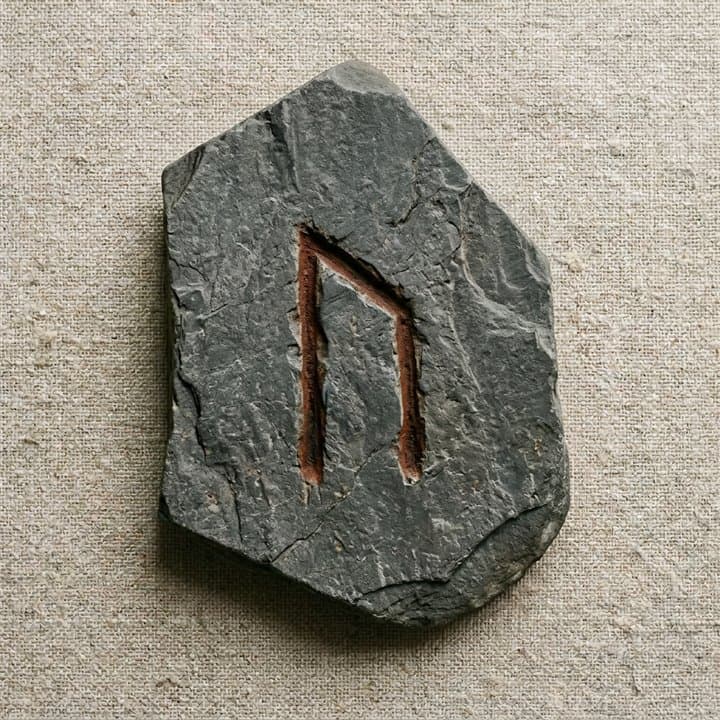
| Character | ᚢ (Unicode U+16A2) |
| Name | Uruz · Old English ur · Old Norse úr |
| Sound value | u |
| Number | 2 of 24 |
| Aett | first |
| Reversal | yes |
Strength · endurance · power that has not been tamed
Uruz is often reduced to “primal strength,” but the surviving evidence is much less tidy. The Old English rune poem describes the aurochs: a fierce, high-horned wild ox that crossed the moors and fought with its horns. The Norwegian poem uses the corresponding name for slag or poor iron, while Icelandic witnesses connect it with drizzle, crop damage, and a shepherd’s misery. These later poems do not preserve one common divination meaning. They preserve three striking examples of forces that do not adjust themselves to human wishes.
That distinction also separates Uruz from Fehu. Fehu is livestock under human ownership; Uruz is the animal that never entered the barn. Modern interpretation can reasonably take strength, stamina, and untamed energy from that contrast, provided it labels the reading as modern rather than quoting it as ancient doctrine.
The name and its history
The reconstructed name ūruz is usually connected with the aurochs, the extinct wild ox described in the Old English rune poem. The cognate rune names do not stay that simple. Norwegian úr denotes slag or poor iron, while Icelandic witnesses use the name for drizzle. Linguists have proposed ways these senses might share an older root, but there is no settled explanation that turns all three into one definition.
That uncertainty is part of the evidence. “Primal power” is a modern synthesis, not a translation shared by the poems. The historical record gives an untamed animal, unreliable material, and weather that harms crops.
What the rune poems emphasize
The Old English verse respects the aurochs as a fierce, high-horned animal that fights with its horns and crosses the moors. The Norwegian verse turns to iron full of slag, material that may fail under load. Icelandic versions describe drizzle as the clouds’ weeping, the harvest’s ruin, and the shepherd’s hatred.
The images differ, yet each places people before a force or material condition that does not obey them. That pattern supports a modern reading about capacity and endurance only if the reading also allows for limits, testing, and the possibility that apparent strength is unsound.
Upright
Upright Uruz points to strength that is actually available: physical stamina, emotional staying power, or a project with enough substance to survive pressure. Its question is not whether the force feels impressive, but whether it has a useful shape. Untrained ability, anger, appetite, and ambition can all be powerful without being ready to direct a decision.
Use this position to identify the resource and the channel it needs. A demanding week may call for endurance; a promising idea may need practice; a conflict may require restraint rather than another display of force. Uruz favors capacity that can be tested, not a heroic story about being invulnerable.
Reversed
A reversed Uruz can show energy working against its owner: exhaustion after prolonged strain, stubbornness mistaken for resolve, or force applied where judgment was needed. The slag image offers another useful frame—something looked solid until it was placed under load.
Reversal is a modern reading convention. None of the rune poems supplies a separate reversed verse. Treat this section as a prompt to check depletion, direction, and material weakness, not as a forecast of illness or defeat.
Uruz in four areas of life
Love. Notice the difference between attraction and pressure. Strong feeling does not remove the need for consent, pacing, and an honest conversation.
Work. A difficult assignment may be within your capacity, but raw effort still needs priorities. Ask what can be trained, delegated, or stopped.
Money. Uruz is not a promise of profit. It can highlight the labor behind an income plan—or an investment that appears sturdy but has not been stress-tested.
Well-being. Read Uruz as a prompt to observe stamina and recovery, never as a diagnosis. Persistent symptoms or exhaustion belong with qualified medical care.
Neighboring runes
With Fehu, Uruz places two cattle images side by side: wealth brought under ownership and the animal that remains wild. The pair asks whether a resource is actually under control.
With Thurisaz, raw strength meets a sharp obstacle. The combination can frame a collision in which power is available but judgment about distance and restraint still matters.
As a daily rune
Give one source of energy a workable form today. Decide what you will stop before it becomes strain.
Choose a concrete measure: a time limit, a training block, a recovery period, or one task that deserves your best effort. Review the choice that evening instead of drawing until you receive a more flattering answer.
Frequently asked questions
Is Uruz historically the aurochs rune?
The Old English poem clearly describes an aurochs. The Norwegian and Icelandic traditions use related rune names for slag and drizzle, so the evidence does not support one simple meaning across all three poems.
What does reversed Uruz mean?
It can frame depleted reserves, misdirected force, or an apparent strength that fails under pressure. That reversed meaning is modern.
Can Uruz predict health or recovery?
No. It can prompt you to notice energy, strain, and recovery, but it cannot diagnose a condition or predict a medical outcome.
How is Uruz different from Fehu?
Fehu begins with owned, movable wealth such as cattle. Uruz begins with the untamed wild ox and asks what strength does before it has been domesticated or directed.
Why do the rune poems give Uruz different meanings?
The related names refer to an aurochs in the Old English poem, slag or poor iron in the Norwegian poem, and drizzle in Icelandic witnesses. No single ancient divination definition resolves those differences.
To reflect on
Where are you relying on force because you have not chosen a direction? What evidence shows that your reserves are adequate? Name one boundary that would make the effort sustainable and one sign that would tell you to pause.
Explore all 24 rune meanings, compare the main runic alphabets, try a rune reading, or see how a name can be approximated in runes.
Editorial note: Rune reading is a modern reflective practice. This page separates linguistic and historical evidence from contemporary interpretation.